Chapter 1 || ProductFlo Manifesto
Legacy MCAD and ECAD tools are stuck in decades-old paradigms—manual, siloed, and disconnected—leaving engineers frustrated by tedious workflows. ProductFlo breaks these silos with a cloud-native, AI-powered platform, delivering the generational leap the industry has been waiting for.
Legacy Engineering Tools: Stuck in the “Abacus” Era
To appreciate the leap forward, we have to understand where traditional tools fall short. Nearly all mainstream MCAD and ECAD software – whether it’s SolidWorks for mechanical design or Altium for PCB layout – share a common heritage. They’re essentially UI skins built atop decades-old computational kernels, originally designed when engineers weren’t expected to be programmers.
For example, SolidWorks, Onshape, and even Siemens NX all use the Parasolid geometric modelling kernel (first developed in 1988), and PTC’s Creo uses its Granite kernel from 1985. Many also rely on the same constraint solvers (like D-Cubed, dating back to 1989) under the hood.
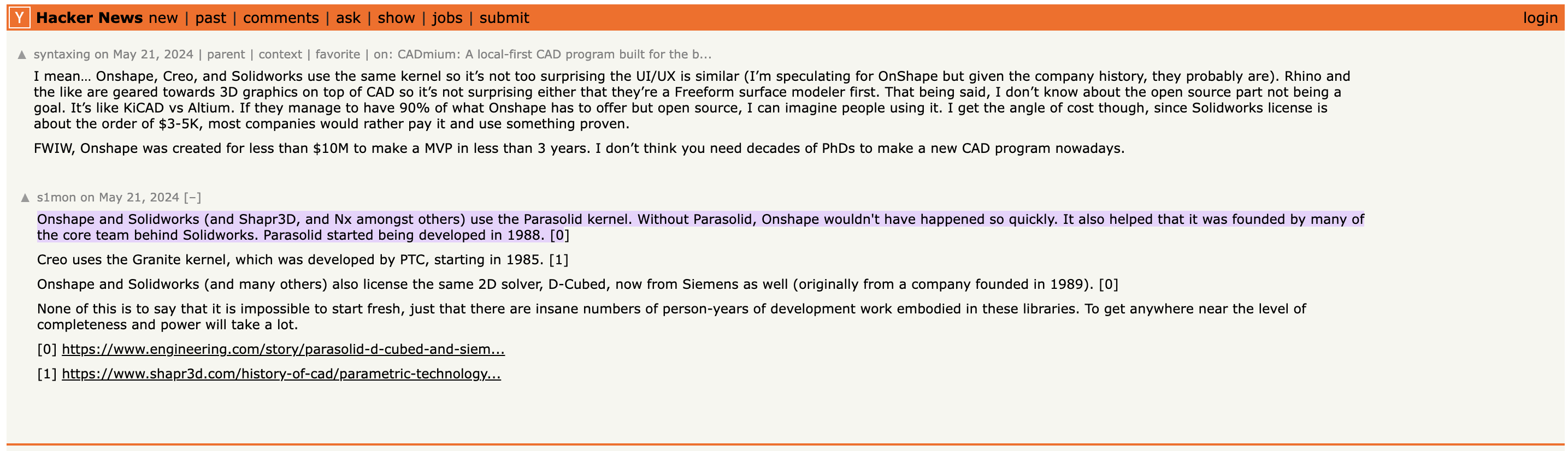 CAD Kernels discussion on YC Hacker News
In other words, the core “brain” doing the heavy lifting in these tools hasn’t fundamentally changed in over thirty years.
What has changed mainly are the user interfaces wrapped around these kernels, but even those improvements have been incremental. The interfaces and functionality of major CAD platforms have “evolved only marginally since the 1990s”. If you teleport an engineer from 1995 into a modern CAD session, they’d find the toolbar-and-browser UI quite familiar. These systems were built for a world where engineers click dropdowns and drag geometry, and where each discipline works in siloed software environments. They assume the user is not a programmer, so everything must be done through graphical operations. Scripting and automation, if available at all, are limited to power-users and often treated as afterthoughts.
The result is that engineering workflows are still painfully manual and disconnected. Consider a typical hardware development cycle at a startup or even a large company:
- A mechanical engineer designs a housing in a CAD program and manually exports a STEP file.
- An electrical engineer separately designs a PCB in an ECAD tool, then emails a BOM spreadsheet to the purchasing team.
- A firmware developer writes code in yet another environment, often waiting on hardware iterations.
- A project manager cobbles together updates via email threads and shared folders named “_Final_v2_realFINAL”.
Version control is inconsistent; collaboration is clunky and error-prone. Despite the proliferation of software, much of the process still relies on human glue and endless button clicks. The different tools are like instruments playing out of sync, with no conductor to bring them together.
It’s telling that even cloud-era entrants like Onshape (founded by ex-SolidWorks team members) largely replicated the old CAD paradigm, just delivered via browser. They improved accessibility, but didn’t reinvent what the engineer actually does. No wonder many modern engineers – raised on seamless SaaS apps and automation – feel frustrated that hardware design software hasn’t kept up.
As Scale Venture Partners noted in late 2024, while software development enjoyed a revolution in tools and workflows, hardware engineers were left using “siloed” systems and processes their predecessors used decades ago.
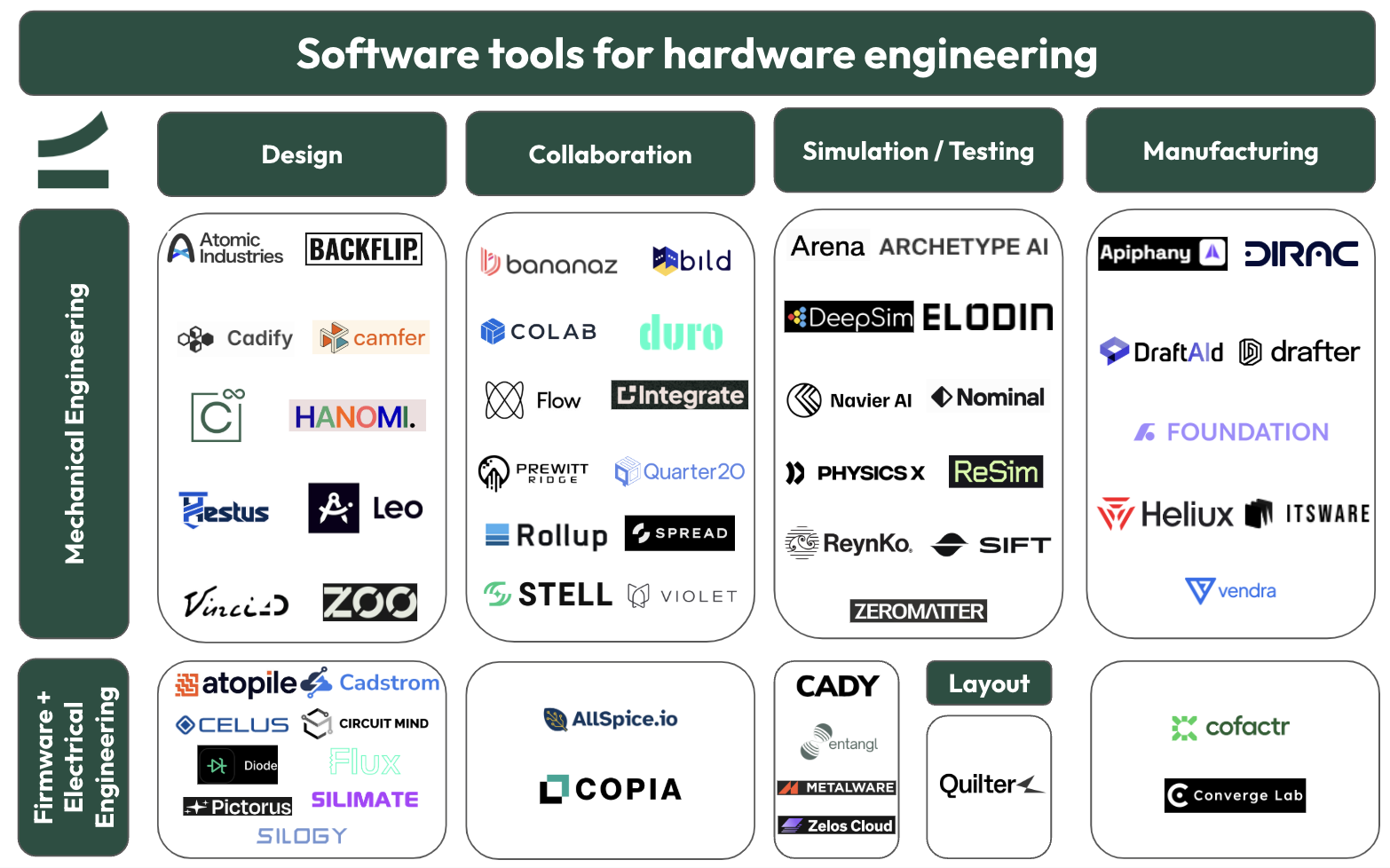 Building the next generation of hardware: Why AI-powered engineering tools matter
Now, however, demand is shifting toward cloud-native, AI-enhanced solutions that can break these silos. Incremental tweaks aren’t enough; a paradigm shift is needed.
In short, the industry has been waiting for its “abacus-to-computer” moment – and that’s exactly what ProductFlo aims to deliver.
TLDR: Key Takeaways
- Legacy MCAD/ECAD tools are built on decades-old kernels and UI paradigms, leading to manual, siloed, and error-prone workflows.
- Most improvements in traditional CAD/PLM have been incremental, focusing on UI rather than rethinking the engineering process.
- Engineers today still rely on disconnected tools, manual exports, and email threads, with limited automation or collaboration.
- Even cloud-based entrants mostly replicate old paradigms instead of enabling true workflow transformation.
- The industry is overdue for a generational leap: ProductFlo aims to deliver this by breaking silos with cloud-native, AI-driven automation and collaboration.
Stop bad hardware changes before they ship.
30-day pilot on one active product. Fixed $8k. Live on your own BOM in week one.