EVT, DVT, PVT, and MP Explained: The Four Stages of Hardware Product Development
Learn what EVT, DVT, PVT, and MP mean in hardware development, what each stage validates, and how engineering teams move from prototypes to production.
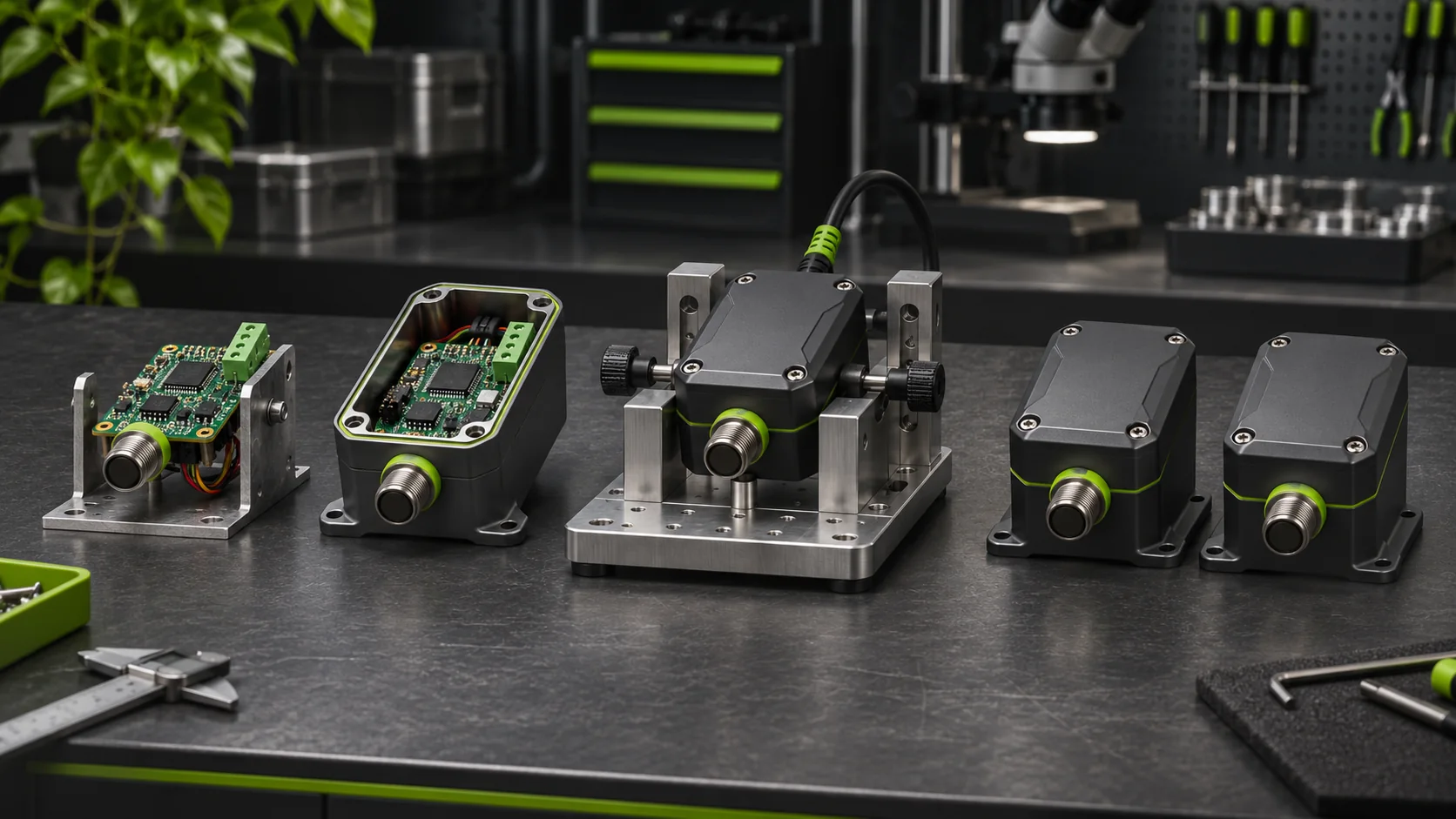
Introduction: A Working Prototype Is Not a Production-Ready Product
Building a working hardware prototype is an important engineering milestone. But it is not the same as building a product that can be manufactured reliably, shipped to customers, and supported in the field.
A prototype might work perfectly on an engineer's desk and still fail in commercial production.
The enclosure may deform under heat. Electronic components may behave differently across operating temperatures. A connector might be difficult to assemble consistently. A supplier might deliver parts with unexpected tolerances. The production line might introduce defects that never appeared during prototyping.
This is why hardware engineering teams use a structured validation process known as EVT, DVT, PVT, and MP.
These stages connect engineering development with manufacturing readiness. Each answers a different question, produces different evidence, and reduces a specific category of risk.
Understanding the differences helps teams avoid expensive redesigns, manufacturing delays, and premature product launches.
1. What Are EVT, DVT, PVT, and MP?
EVT, DVT, PVT, and MP describe four successive stages in a hardware product's journey toward commercial production.
| Stage | Full name | Main question |
|---|---|---|
| EVT | Engineering Validation Test | Does the engineering design work? |
| DVT | Design Validation Test | Does the complete product meet its requirements? |
| PVT | Production Validation Test | Can manufacturing reproduce it consistently? |
| MP | Mass Production | Can we sustain quality, cost, and output at commercial scale? |
These stages belong to the broader New Product Introduction (NPI) process, which coordinates engineering, procurement, manufacturing, quality assurance, and product operations.
They are not simply labels for prototype generations. Each stage is an evidence-based decision gate.
The objective is to move progressively from proving a technical solution to proving a manufacturing system.
2. EVT: Engineering Validation Test
Does the engineering design actually work?
EVT is where engineers validate their implementation of the product architecture.
Before EVT, teams commonly build proof-of-concept prototypes using development boards, off-the-shelf modules, 3D-printed components, and manually assembled parts.
Those prototypes demonstrate feasibility. EVT moves toward a complete, production-intent engineering design.
For example, consider a company developing a wireless smart gate controller. The product detects an authorized vehicle approaching a residential gate and automatically activates the gate-opening mechanism.
During EVT, engineers need to demonstrate that the core subsystems work together.
Electrical engineering
The team verifies that the power supply, wireless communication circuitry, motor-control interface, and sensors operate within their intended limits.
Typical measurements include:
-
Voltage regulation and current consumption.
-
Signal integrity and communication reliability.
-
Power-up and shutdown sequencing.
-
Battery performance, when applicable.
-
Initial electromagnetic interference measurements.
Mechanical engineering
Engineers assess enclosure dimensions, PCB mounting, connector clearance, heat dissipation, sealing concepts, and assembly feasibility.
Firmware engineering
The embedded software is tested on the actual target hardware.
Important questions include whether the device boots reliably, handles wireless disconnections, recovers from faults, and communicates with other components correctly.
System engineering
Individual subsystems must function as one integrated product.
The gate controller may detect a vehicle successfully but fail to trigger the opening mechanism under a particular power condition. EVT is where this type of integration problem should surface.
What does EVT produce?
A successful EVT normally delivers:
-
Functional engineering prototypes.
-
A validated product architecture.
-
Initial engineering BOM and CAD revisions.
-
Electrical schematics and PCB layouts.
-
Measured performance data.
-
Documented failures and corrective actions.
-
An initial design-for-manufacturing assessment.
EVT does not mean the product has passed every reliability or regulatory test. It means the architecture is sufficiently stable to justify detailed validation.
The EVT exit decision: Is there a credible, production-worthy design configuration worth investing in?
If the answer is no, the correct decision is to iterate rather than force the project forward.
3. DVT: Design Validation Test
Does the finished product meet its specifications?
DVT moves from validating engineering implementation to validating the complete product design.
The product should now closely resemble the version customers will eventually receive.
Mechanical parts increasingly come from production tooling or production-representative processes. Electronics reflect the intended production design. Firmware approaches release maturity.
DVT tests whether the integrated system meets its requirements across anticipated operating conditions—not merely under ideal laboratory conditions.
Returning to the smart gate controller, consider several engineering requirements:
-
Operate across the defined outdoor temperature range.
-
Detect authorized vehicles within a specified distance.
-
Reject unauthorized access attempts.
-
Survive expected rain, dust, and environmental exposure.
-
Maintain communication reliability when installed near metal structures.
-
Meet applicable electrical and radio compliance requirements.
A device might satisfy all its functional requirements at room temperature but fail when exposed to extreme heat or electromagnetic interference.
DVT is designed to uncover these weaknesses.
Typical DVT activities
Reliability testing
Engineers test whether the product continues working after repeated mechanical, electrical, and environmental stress.
Environmental testing
The product is exposed to temperature extremes, humidity, vibration, mechanical shock, or ingress conditions appropriate to its intended environment.
Regulatory verification
Engineering and compliance teams evaluate the product against requirements applicable to its target markets. Depending on the product, these may involve FCC rules, EU conformity requirements, electrical safety standards, or industry-specific regulations.
Mechanical validation
Production-intent enclosures are inspected for dimensions, tolerances, cosmetic quality, and assembly consistency.
Firmware validation
Software is tested for stability, recovery behavior, update reliability, security requirements, and interactions with the final hardware.
What does DVT produce?
Typical deliverables include:
-
Product verification and validation reports.
-
Reliability and environmental test results.
-
Compliance test reports and certification evidence, as applicable.
-
Approved production-intent mechanical and electrical designs.
-
A controlled bill of materials.
-
Supplier and component approvals.
-
A design freeze or controlled release baseline.
The DVT exit decision: Does the intended product meet its documented requirements, and is the design mature enough to transfer into production-process validation?
At this point, major engineering changes should be exceptional and controlled.
4. PVT: Production Validation Test
Can the factory build the product repeatedly?
Passing DVT demonstrates that a design can satisfy its requirements.
It does not demonstrate that a factory can manufacture that design economically and consistently.
That is the purpose of PVT.
PVT generally uses the intended manufacturing line, production tooling, approved materials, trained operators, assembly instructions, and production test equipment.
The emphasis shifts from product behavior to manufacturing-process capability.
For the smart gate controller, the factory must repeatedly assemble the PCB, enclosure, seals, wiring, antenna, and other components while maintaining required quality.
A unit assembled by an experienced development engineer might pass every test. The same design may expose problems when operators must assemble dozens or hundreds of units using standardized instructions.
Potential problems include:
-
Inconsistent torque on enclosure fasteners.
-
Incorrect cable routing.
-
Damaged connectors.
-
Variable adhesive application.
-
Incorrect firmware programming.
-
Missing serialized identifiers.
-
Poorly calibrated functional test fixtures.
PVT is where teams determine whether these operations are stable, measurable, and repeatable.
What gets measured?
Key indicators include:
First-pass yield (FPY): The percentage of units that pass a defined process or test sequence without rework or repair.
Cycle time: The time required to complete a defined production operation or output interval.
Throughput: The number of completed units produced over a given period.
Defect and scrap rates: The frequency of failures and material losses.
Process capability: The ability of critical manufacturing processes to maintain specified tolerances or performance requirements.
PVT also verifies packaging, labeling, traceability, inspection criteria, and end-of-line testing.
What does PVT produce?
-
Pilot production units.
-
Approved assembly and inspection procedures.
-
Qualified manufacturing fixtures.
-
Production test results.
-
Yield and cycle-time measurements.
-
First article inspection or other applicable part-approval records.
-
Manufacturing quality-control plans.
-
Evidence supporting production release.
The PVT exit decision: Can the manufacturing process deliver conforming products at the required quality and operating rate?
If not, the team must correct the process, repeat necessary trials, or reopen the design when the problem is fundamentally design-related.
5. MP: Mass Production
Can we sustain commercial manufacturing?
Mass production begins when the product and its manufacturing process have achieved the required release readiness.
The focus is no longer primarily on discovering whether the product works or whether the factory can assemble it.
The objective is sustained operational performance.
Depending on the product, commercial output might involve dozens of devices per month or hundreds of thousands of units per week.
Low-volume industrial equipment and high-volume consumer electronics can both enter production, even though their manufacturing economics differ substantially.
The engineering work does not stop at MP
During mass production, engineering, quality, and operations teams continue monitoring:
-
Production yield and defects.
-
Supplier quality and material availability.
-
Cost per finished unit.
-
Warranty and field failure data.
-
Manufacturing changes.
-
Firmware and hardware revisions.
-
Production capacity and equipment maintenance.
A product may require engineering changes after launch because of field failures, supplier discontinuation, cost reduction, or reliability improvements.
Those changes must be evaluated and released without losing traceability to earlier versions.
Mass production is therefore an ongoing engineering and operational responsibility, not simply the end of development.
6. How the Four Stages Fit Together
The transition from EVT to MP changes the type of evidence required.
| Dimension | EVT | DVT | PVT | MP |
|---|---|---|---|---|
| Focus | Engineering design | Product requirements | Manufacturing process | Sustained production |
| Design flexibility | High | Decreasing | Restricted | Controlled changes |
| Primary activity | Engineering experiments | Product qualification | Pilot manufacturing | Manufacturing execution |
| Dominant risk | Technical feasibility | Reliability and compliance | Yield and repeatability | Quality, supply, cost |
| Main ownership | Engineering | Engineering, quality, compliance | Manufacturing, quality | Operations, quality, supply chain |
| Key deliverable | Proven architecture | Approved product design | Validated production process | Consistent commercial output |
These responsibilities are not exclusive. Engineering remains involved in every stage, and manufacturing input should begin before PVT.
Stage gates are decisions, not calendar dates
A hardware program rarely moves through these stages perfectly on the first attempt.
Teams may execute EVT1 and EVT2 or DVT1 and DVT2 to resolve defects and retest changes.
A failed DVT reliability test may require modifying a component, redesigning an enclosure, or revisiting the PCB layout.
A failed PVT pilot might expose a process problem that is solved through fixture improvements. A more fundamental assembly failure might require reopening the design.
A disciplined process allows iteration while preserving evidence.
7. Why Revision Control Matters Across Every Stage
One of the most expensive coordination problems in hardware development is losing track of which product configuration was actually tested.
Consider this situation:
The mechanical engineering team approves enclosure revision C.
The PCB supplier manufactures revision B.
The firmware team validates version 1.8 against an earlier PCB revision.
The contract manufacturer receives a BOM containing an obsolete connector.
Each team may believe its work is ready for production. Yet the combined product configuration has never been properly validated.
This illustrates why stage-gate management requires more than project timelines.
Every build should have a documented configuration baseline linking:
-
Product requirements.
-
Mechanical CAD and drawings.
-
Electronics and PCB revisions.
-
Firmware and software versions.
-
Engineering and manufacturing BOMs.
-
Suppliers and approved alternatives.
-
Test procedures and results.
-
Nonconformances and corrective actions.
-
Engineering approvals and release decisions.
A stage-gate approval should identify exactly what was approved—not merely record that a meeting happened.
8. The Difference Between Verification and Validation
The terms EVT and DVT are used somewhat differently across manufacturers. Some organizations call them Engineering Verification Test and Design Verification Test.
It is important not to confuse stage names with formal verification and validation activities.
In systems engineering:
Verification asks: Did we build the product according to its specified requirements?
Validation asks: Does the product satisfy its intended use and user needs?
Both activities may take place across multiple stages.
For example, a gate controller might pass a verification test demonstrating a specified wireless detection distance, while validation with actual users reveals that its behavior is unsuitable for a particular driveway layout.
Passing a technical specification does not automatically prove that the product is appropriate for its intended use.
Conclusion: Every Stage Must Retire a Different Risk
EVT, DVT, PVT, and MP provide a practical framework for turning an engineering concept into a commercially manufactured product.
EVT reduces technical uncertainty.
DVT reduces product performance, reliability, and compliance uncertainty.
PVT reduces manufacturing-process uncertainty.
MP focuses on sustaining quality, throughput, and economic performance.
The most important principle is simple:
Do not advance a hardware product because the next stage appears on the schedule. Advance because the evidence demonstrates that the current stage has achieved its objectives.
Teams that understand this distinction can make better engineering decisions, coordinate suppliers more effectively, and reduce the risk of discovering fundamental problems after production has already started.
Frequently Asked Questions
What comes before EVT?
Usually a concept, feasibility, or proof-of-concept phase. This establishes that the underlying technology and product approach are technically feasible.
Is EVT the same as prototyping?
No. EVT normally uses integrated, production-intent engineering prototypes, whereas earlier prototyping can involve incomplete assemblies, development modules, and exploratory designs.
Can a product fail DVT after passing EVT?
Yes. EVT success does not guarantee reliability across environmental extremes, production variability, or regulatory test conditions.
Is PVT the same as mass production?
No. PVT validates the manufacturing process through controlled production builds. MP is sustained commercial manufacturing after the applicable release criteria are satisfied.
Does every hardware company use these exact names?
No. Organizations use variations such as engineering verification, design verification, pilot production, and release-to-ship. The essential requirement is clarity about what each gate must prove.
Further Reading
In this series
Stop bad hardware changes before they ship.
30-day pilot on one active product. Fixed $8k. Live on your own BOM in week one.